

Tanner
How Much Will My Custom Home Cost?
May 10, 2026
3
Min
What Actually Drives the Price of a Luxury Custom Home
One of the first questions homeowners ask is: How much will my custom home cost? It is a fair question, but it is also one of the hardest to answer with a simple number.
Many online articles attempt to reduce custom home pricing to a single formula, usually price per square foot. While that may sound helpful, it often creates the wrong expectations. In reality, square footage is only a small piece of the equation. When it comes to a truly custom home, cost is shaped far more by design, site conditions, structural requirements, materials, and the level of customization involved.
At Jaffa Group, we specialize in high-end custom homes where architecture, craftsmanship, and site integration matter. From modern mountain homes with expansive glass to luxury residences with highly detailed interiors, we have seen firsthand that two homes with the same square footage can vary by hundreds of thousands, or even millions, of dollars.
The reason is simple: custom home cost is not determined by size alone. It is determined by what it takes to bring a specific vision to life.
Why Price Per Square Foot Does Not Tell the Whole Story
One of the biggest misconceptions in custom home building is the belief that you can accurately price a home by saying something like, “It will be around $400 per square foot.” That may work for broad comparisons, but it is rarely an accurate way to budget a luxury custom home.
Two homes may be exactly the same size on paper, but the total investment can be dramatically different depending on factors like:
Window and glass packages
Structural engineering
Design complexity
Site conditions
Energy and mechanical systems
For example, a straightforward home on a flat lot with standard construction methods will have very different costs than a custom-designed mountain residence with large open spans, steel framing, and floor-to-ceiling glass.
This is why we believe homeowners should be careful about relying too heavily on price-per-square-foot averages. Those numbers can be misleading because they often ignore the very things that make a custom home custom.
What Really Drives the Cost of a Custom Home
If square footage is not the main driver, what is? In our experience, the biggest cost drivers usually come down to four major categories: architecture, site, structure, and finishes.
1. Architecture and Design Complexity
The more custom the design, the more involved the build usually becomes. Homes with dramatic rooflines, large cantilevers, open floor plans, extensive glazing, custom steel, or highly detailed architectural features require more planning, more engineering, and often more specialized labor and materials. This is especially true in luxury homes where the architecture itself is one of the defining features of the project.
2. Site Conditions
Many homeowners focus on the house itself and overlook the cost of preparing the property for construction. This is one of the most important parts of budgeting, especially in mountain communities and sloped lots.
Site-related costs can include:
Excavation
Retaining walls
Soil conditions
Utility access
Driveway construction
Slope stabilization
Foundation support and engineering
In many projects, these costs begin long before vertical construction starts. That is why understanding the lot is just as important as understanding the floor plan.
3. Structural Requirements
Luxury homes often involve design elements that require more advanced structural solutions. Large glass walls, long open spans, steel beams, complex foundations, and engineered support systems all add cost, but they are often essential to achieving the architecture the homeowner wants. This is one of the areas clients are often surprised by. Many assume the biggest budget items will be cabinets, flooring, or fixtures, when in reality the structure needed to support the design may be one of the largest cost drivers.
4. Interior Finishes and Level of Customization
Finishes absolutely matter, and they can dramatically influence the final investment. Cabinetry, natural stone, imported tile, high-end appliances, plumbing fixtures, millwork, and specialty detailing can all increase costs quickly, especially when those selections are used throughout the home.
The key is understanding where those investments matter most. In many successful projects, homeowners focus their budget on the areas with the greatest visual and daily impact, while making more restrained selections in secondary spaces.
The Land and Site Costs Homeowners Often Forget
One of the most common mistakes we see is homeowners asking for a construction price before fully understanding the lot they plan to build on. This is a major budgeting issue because the site can significantly affect the total project cost.
A home built on a flat, build-ready lot is very different from a home built on a steep hillside or mountain parcel. The second home may require extensive excavation, engineered retaining walls, longer utility runs, specialized drainage solutions, and more complex foundation systems.
Those costs are real, and they can be substantial. Before a homeowner asks, “How much will the house cost?” a better early question is often: “What will it take to build on this site?” That answer can shape the entire project budget.

Case Study 1: A Modern Mountain Home with Large Glass Walls
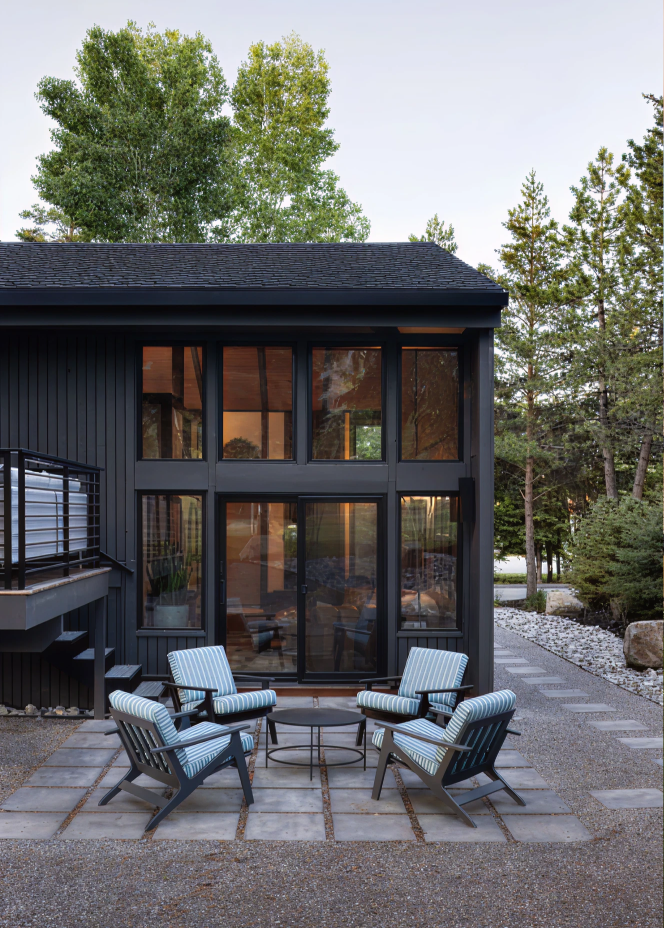
One project that illustrates this well was a modern mountain luxury home designed to maximize surrounding views. The home featured open living spaces, steel structural elements, and expansive floor-to-ceiling glass.
At first glance, many people might assume the budget would be driven mostly by finishes. However, in this home, the biggest cost driver was not square footage; it was the architecture. To create the open layout and dramatic glass walls, the project required significant structural engineering and custom steel beams. The window package alone was far more expensive than standard residential windows because it involved oversized architectural glass systems designed specifically for mountain conditions.
The site added another layer of cost. Because the home was built on a sloped lot, the project required additional excavation, retaining walls, and foundation support. What surprised the client most was how much the structural and engineering requirements influenced the budget. Like many homeowners, they initially expected flooring, cabinetry, and interior finishes to be the biggest line items. Instead, the lesson was clear: design complexity often drives cost more than square footage.
To keep the project aligned, we worked closely with the client to prioritize the elements that mattered most — especially the glass systems and structural design that defined the home while being thoughtful about finish selections in areas that would not impact the architecture as significantly.
Case Study 2: A Luxury Home Defined by Interior Finishes
In another project, the architecture was relatively straightforward, but the budget was heavily influenced by interior selections and craftsmanship.
This custom luxury home included custom cabinetry throughout, specialty stone surfaces, spa-level bathrooms, premium appliances, and highly detailed millwork. In this case, the structure was not the primary cost driver. The finishes were.
What surprised the homeowners most was how quickly individual finish decisions added up when applied across the entire home. A premium tile selection or specialty plumbing fixture might not seem dramatic in isolation, but repeated throughout a full residence, those choices can significantly increase the final investment.
The homeowners ultimately focused their budget on the kitchen, primary suite, and main living areas where those design details would have the greatest impact. In secondary spaces, they chose simpler selections that still supported the overall design language without pushing the budget unnecessarily.
The takeaway from this project is equally important: two homes with the same floor plan can vary widely in cost depending on the level of materials, detail, and customization selected.
Our Honest Opinion: Budgeting Should Start with Clarity, Not a Guess
One of our strongest beliefs is that homeowners should not chase a price before they have clarity on what they want to build. Trying to get an accurate number too early often leads to frustration because pricing only becomes meaningful once the vision, priorities, and site conditions are understood.
Before asking for a number, homeowners should first define what matters most:
Is the priority the architecture?
Is it maximizing views?
Is it creating a certain interior experience?
Is it square footage?
Is it the level of finish?
Is it building on a specific lot?
Without those answers, any early price is just a loose estimate. The more clarity a homeowner has about priorities, the more productive the budgeting process becomes.
We also believe one of the smartest things a homeowner can do early is understand the site before finalizing the design. Slope, soil, utility access, retaining walls, and driveway requirements can all affect cost in a major way. In other words, the most effective budgeting does not start with asking, “What is your price per square foot?” It starts with asking, “What are we building, where are we building it, and what matters most?”
Why Our Perspective Is Different from General Online Advice
Most articles about custom home pricing take a broad, national approach. They rely on averages and ranges that may be useful for general comparison, but they usually miss the real-world factors that shape a truly custom project.
Our perspective is different because it comes from direct experience designing and building luxury custom homes. As a design-build firm, Jaffa Group is involved from the earliest concept stages through construction and finishing details. That integrated process allows us to help clients understand cost earlier and more accurately because design and budgeting happen together.
Instead of creating a design in isolation and pricing it later, we help clients understand in real time how certain decisions affect investment. If a home includes large glass systems, complex rooflines, steel framing, or highly custom detailing, those impacts can be discussed early before they become surprises. That is one of the biggest advantages of the design-build model: it creates alignment between vision, budget, and construction planning from the beginning.
What Online Articles Usually Miss
In real projects, the biggest budget drivers are often not the things homeowners expect. Many assume the main variables are countertops, flooring, or appliance packages. Those matter, but often the larger factors are:
Site work and excavation
Engineering requirements
Structural complexity
Window and glass systems
Mechanical and energy-performance systems
Custom detailing and craftsmanship
These are the realities that broad online articles tend to oversimplify. The truth is that custom home cost is highly specific to the project. That is why generalized advice can only go so far.
The Better Way to Plan a Custom Home Budget
We believe the best custom homes happen when design, budget, and construction planning are aligned from the start. When homeowners bring the builder into the process early and collaborate closely with the design team, it creates a much more transparent and predictable experience. Expectations are clearer. Tradeoffs can be made intentionally. And the finished home is far more likely to reflect both the vision and the investment plan. That approach does not just protect the budget — it leads to better homes.
Final Thoughts
So, how much will your custom home cost? The honest answer is: it depends on far more than square footage. The cost of a custom home is shaped by the design, the site, the structural requirements, the material selections, and the level of craftsmanship involved. Two homes may look similar on paper but be worlds apart in cost once those variables are understood. For homeowners planning a luxury custom home, the most important step is not finding a national average. It is getting clear on your priorities, understanding your site, and working with a team that can align design and budget from the beginning. That is where real cost clarity begins.
share on
12
views


testimonals
Told best by the people who live in these homes.


Jen Harpster
Senior Interior Designer

Scott Jaffa
CEO / Architect

Amy Schwemin
Chief Financial Officer

Bill Stender
VP of Construction

Debbie Kairys
Principal Architect